EN
EN  it
it
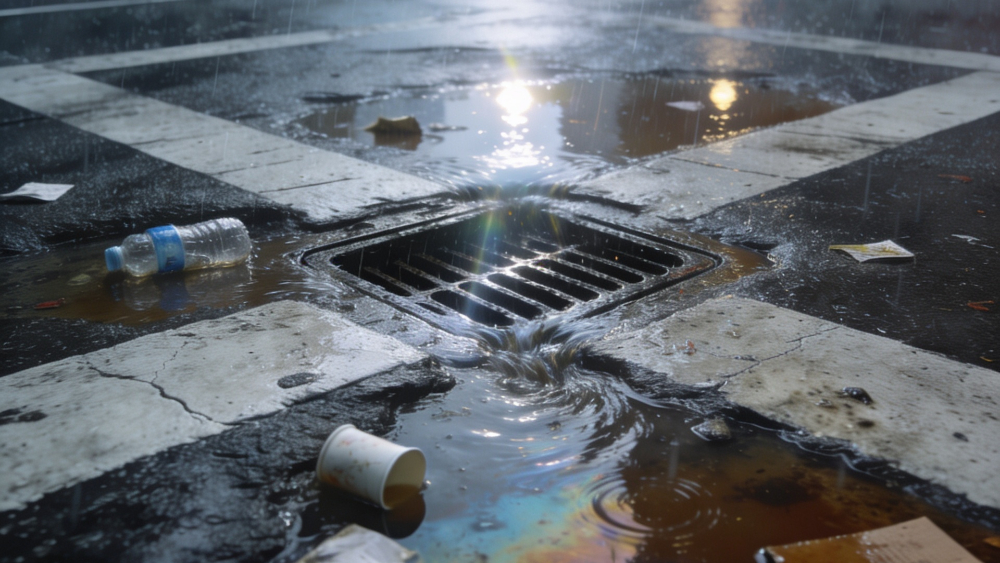
The management of urban stormwater is increasingly linked to the ability to understand what runoff carries from impervious surfaces toward drainage networks and water bodies. Roads, rooftops and traffic areas become collection and transport points for metals, microplastics, pharmaceuticals, industrial compounds and emerging contaminants.
With intense rainfall and often ageing sewer networks, urban runoff takes on not only an environmental dimension, but also an infrastructural and management one. The challenge lies in the ability to intercept substances that are difficult to detect with traditional systems and to guide interventions before pollution reaches water bodies.
This need is the basis for the work of D4Runoff, a European project launched in September 2022 to develop a framework dedicated to the prevention and management of pollution from urban stormwater. The objective is to provide tools capable of assessing risk, identifying sources of contamination and supporting mitigation solutions that can be adapted to different urban contexts.
A European project for more operational tools
Funded with €3.3 million by the European Commission under the Horizon Europe Climate, Energy and Mobility programme, D4Runoff was coordinated by the Danish company VandCenter Syd and involved 13 partners from Denmark, Spain, Portugal, France and Italy.
The consortium brought together expertise in water management, civil engineering, interdisciplinary research and artificial intelligence. The result is a multi-criteria methodology for designing economically efficient mitigation solutions, combining traditional water infrastructure and Nature-Based Solutions through a blue-green-grey approach.
Alongside the methodological work, the project includes an artificial intelligence-assisted management platform, developed to support utilities and public authorities in planning, risk monitoring and the selection of the most suitable solutions for different urban contexts.
From models to field testing
The methods developed by D4Runoff were implemented, tested and validated in three European demonstration sites: Odense, in Denmark, Santander, in Spain, and Pontedera, in Italy. The choice of sites made it possible to observe the framework in different climate areas and in urban contexts with different infrastructural characteristics.
The replicability of the solutions was also assessed in five additional sites, with the aim of verifying the adaptability of the tools to cities differing in climate, urban structure and water management systems.
What emerged from the analysis of pollutants
A central part of the project focused on emerging contaminants present in urban runoff. The study collected samples in six European cities: Copenhagen, Odense, Santander, Pontedera, Riga and Ljubljana. Researchers from the Jožef Stefan Institute, in Slovenia, and the University of Riga, in Latvia, used advanced analytical techniques, combining targeted and non-targeted chemical screening.
The resulting picture is broader than that provided by traditional monitoring. Samples were taken from road surfaces and traffic areas, rooftops, urban drainage systems and combined sewer overflows. The analyses included metals, pharmaceuticals, industrial chemicals, plastic-related compounds and substances associated with vehicle wear.
Alongside the identification of contaminants, the study explored their possible sources of origin. Correlations among the detected substances made it possible to identify clusters linked to traffic, urban wastewater and general background inputs, providing useful indications to guide intervention priorities in urban areas.
Metals and urban traffic
Among the most significant findings is the widespread presence of metals in urban runoff. Zinc, copper and aluminium were frequently detected and found in high concentrations, particularly in samples collected near busy roads or combined sewer overflows.
In some cases, concentrations reached levels potentially harmful to aquatic organisms. This finding confirms the role of vehicle traffic as a significant source of contamination and links urban runoff to the overall management of urban space, not only to water infrastructure.
Monitoring emerging contaminants
The project also highlights the need to expand monitoring programmes beyond already regulated pollutants. Some emerging contaminants, including benzothiazole-2-sulfonic acid, require further investigation because they may be present in urban runoff without being covered by routine controls.
The evolution of water management also depends on the ability to detect new or not yet regulated substances. D4Runoff highlights the importance of complementing traditional control systems with more advanced analytical techniques, in situ sensors and predictive models.
From research to sector discussion: the role of Accadueo
The D4Runoff case recalls issues that are increasingly relevant for the water sector: resource quality, monitoring of emerging contaminants, network resilience, system digitalisation and the integration of traditional infrastructure with Nature-Based Solutions.
These are topics that also find a natural space for in-depth discussion at Accadueo, Italy’s leading international exhibition dedicated to the civil and industrial water sector. The next edition, scheduled for 26 and 27 November 2026 at the Nuova Fiera del Levante in Bari, will bring together companies, institutions, utilities and professionals from across the supply chain to address the main challenges linked to water resource management.
Accadueo addresses these topics from a supply chain perspective, placing at the centre the technologies and expertise needed for more efficient and sustainable water management: from monitoring to purification, from treatment to network control, through to pollution prevention and climate change adaptation.
Within this scope, experiences such as D4Runoff show how applied research, data, hybrid solutions and digital tools can contribute to the preventive management of urban pollution and the protection of water bodies.
Sources:
https://www.waternewseurope.com/new-framework-prevents-pollution-urban-water-runoff