EN
EN  it
it
In the current climate change scenario, water resource management requires a rethinking of its development, moving from an emergency-driven logic to a culture of structured planning.
The effectiveness of environmental policies depends directly on the ability to coordinate between central bodies, such as the Ministry of the Environment and Energy Security (MASE), and regional technical authorities, particularly the District River Basin Authorities. A multi-level governance approach, based on data sharing and the harmonisation of methodologies, is the essential prerequisite for ensuring the resilience of the national water system and the safety of territories.
The National Hydrological Framework
Data recorded in the first quarter of 2026 highlights a marked heterogeneity in Italy's water system, posing serious challenges for infrastructure management.
- Resource Distribution: While southern regions and the islands recorded a significant filling of reservoirs thanks to early-year rainfall, Central and Northern Italy present localised critical issues.
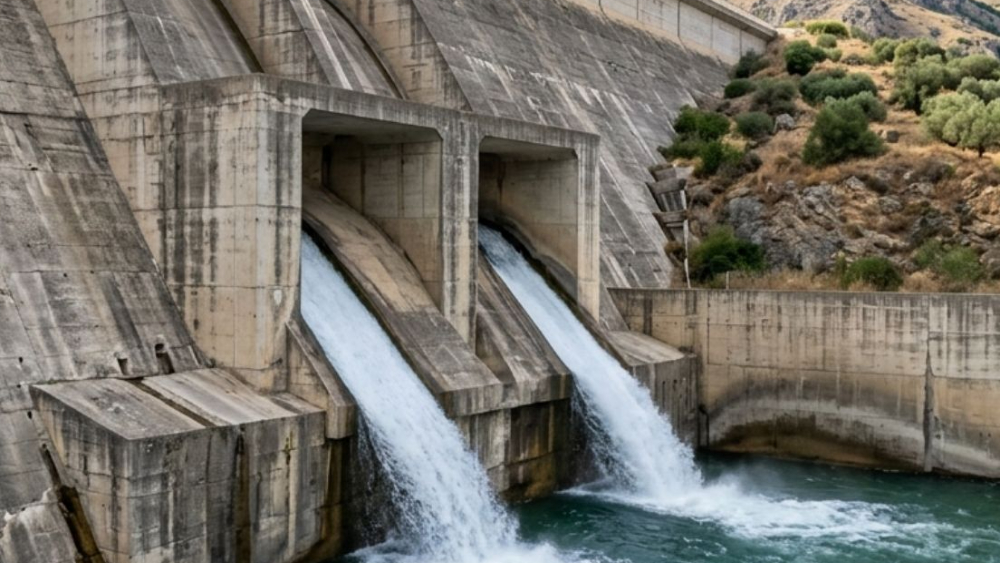
- Infrastructure Limitations: The current system shows a structural difficulty in retaining water volumes during flood events. In several southern areas, reservoir saturation has required controlled releases into the sea for safety reasons, removing potentially valuable reserves for drought periods.
According to ANBI's analysis, the declining trend in precipitation and rising average temperatures, compounded by the thawing of permafrost, make it essential to boost national storage capacity through a series of planned interventions.
Meeting between MASE and the Southern Apennine District River Basin Authority
In this context, the operational meeting held on 17 March in Cosenza between the Directorate General for Sustainable Use of Soil and Water (USSA) of MASE and the Southern Apennine District River Basin Authority represents a key moment for updating district-level planning.
The technical agenda focused on the implementation of advanced tools for hydrogeological risk management and ecosystem protection:
- Water Severity Index (WSI): definition of guidelines for applying the indicator, essential for managing periods of water scarcity.
- Ecological Flow and Hydrological Balance: revision of criteria to ensure the equilibrium of surface and groundwater bodies.
- Multiscale Planning: MASE reaffirmed the importance of a holistic approach that integrates water management and monitoring, introducing new advanced tools, with flood risk and sediment management, thereby strengthening technical support to District River Basin Authorities for the protection of the environment, the territory, and cultural heritage.
- Financial Programming: the implementation of interventions financed through the Development and Cohesion Fund was analysed, with the aim of innovating and streamlining reporting procedures and accelerating the effectiveness of plans.
The goal is therefore to strengthen the planning of all District River Basin Authorities in Italy by creating synergies across the board. A system is taking shape in which MASE plays the role of guidance and coordination, while the District Authorities are responsible for planning and implementing interventions on the ground. This approach enables a continuous dialogue and data exchange, through the introduction of advanced knowledge tools, necessary to address increasingly complex challenges related to: climate change, water resource management, mitigation and management of hydrogeological risk.
Furthermore, the participation of technical bodies such as ISPRA and ISTAT in these meetings demonstrates the commitment to adopt an approach that integrates scientific evidence with public decision-making processes.
Towards a Resilient Water System
The synthesis of current dynamics confirms that Italy's water challenge is playing out on two parallel fronts: infrastructure modernisation and the integration of administrative processes.
On one hand, proposals such as ANBI's "Multifunctional Reservoir Plan" are needed to transform meteorological surpluses into strategic reserves for irrigation, civil, and industrial use. On the other hand, strengthening the dialogue between MASE and the District River Basin Authorities — as emerged from the Cosenza meeting — is the only instrument capable of overcoming technical fragmentation and harmonising resource management at the district level. For sector stakeholders, data transparency and planning consistency remain the fundamental requirements for building a water-secure and sustainable Italy.
In this perspective, Accadueo stands as the reference platform for the entire sector — an opportunity for national dialogue, networking, and in-depth exploration of the main issues related to the water sector. Its next edition will be held from 26 to 27 November 2026, at the Nuova Fiera del Levante in Bari.
Sources: