EN
EN  it
it
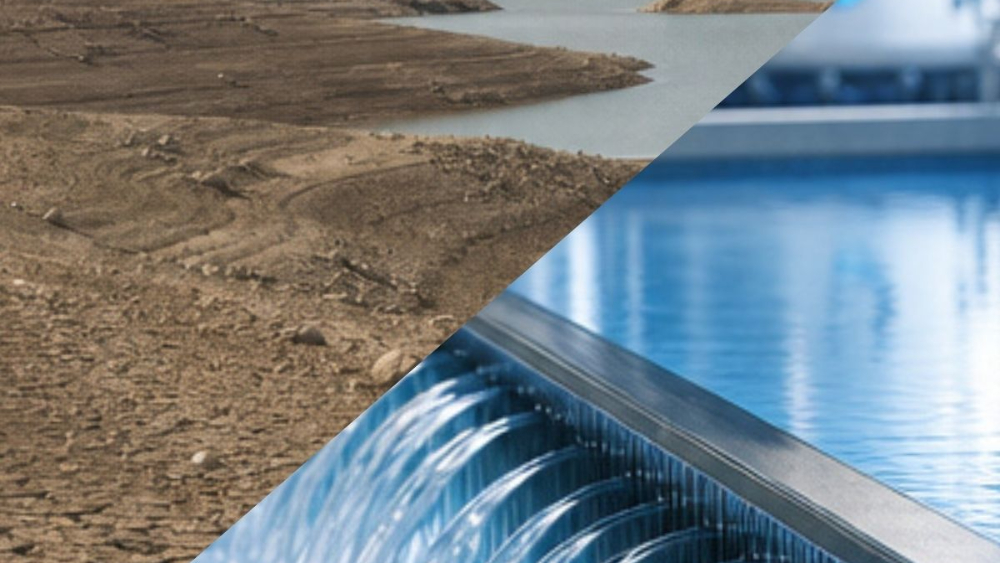
The new water agenda is now moving on several fronts at the same time: networks to be renewed, resources to be protected, losses to be reduced, emerging contaminants to be monitored, skills to be strengthened and digital tools to be integrated into management processes.
These themes will be at the centre of the discussion at Accadueo 2026, where the water supply chain, institutions, operators, companies, designers and the research community will be able to discuss the solutions needed to make the water cycle more efficient, resilient and sustainable.
According to EurEau, European water services confirm significant results in terms of access: 97% of the European population is connected to drinking water services, 90% to wastewater collection systems and 89% to a treatment plant.
At the same time, however, the sector must address increasingly ageing infrastructure, investments struggling to keep pace with inflation, and new pressures linked to PFAS, climate change, energy costs and stricter treatment requirements.
PFAS and emerging contaminants: a growing challenge for water quality
PFAS, per- and polyfluoroalkyl substances, are chemical compounds that are highly persistent in the environment, often referred to as “forever pollutants” because they are difficult to break down.
Their presence in water represents one of the most delicate challenges for monitoring, treatment and the protection of water resource quality. The issue directly concerns utilities, wastewater treatment operators, laboratories, technology companies, regulators and the research community.
The growing focus on PFAS, microplastics, pesticides and other micropollutants confirms that water quality can no longer be addressed solely as an environmental issue. It is also an industrial, regulatory, technological and economic issue.
Investment and infrastructure renewal
The EurEau report highlights a key point: infrastructure renewal is now one of the main priorities for water operators.
Annual investments in water infrastructure are estimated at around €52.5 billion across Europe, including €36.6 billion in the EU27. However, investment growth remains below long-term needs and, within the EU27 alone, below inflation.
This figure confirms a structural challenge: maintaining high service levels requires stable planning, adequate resources and investment capacity aligned with the evolution of networks, plants and environmental standards.
Water Resilience Strategy: the European framework
The European Union’s Water Resilience Strategy aims to strengthen water resilience across the entire water cycle.
The strategy refers to several areas of intervention: resource protection, pollution reduction, infrastructure modernisation, loss reduction, promotion of digital solutions and mobilisation of public and private investment.
The EU Council document also refers to the target of improving water efficiency by 10% by 2030. This is a relevant indication because it shifts the water issue from a mainly emergency-based approach to long-term planning.
The issue is not only about environmental sustainability, but also about European water security: availability of the resource, continuity of services, water quality and the ability of territories to respond to drought, extreme events and industrial pressures.
For the water sector, this means working on several levels: infrastructure, governance, technologies, skills and financing models.
Urban wastewater, quaternary treatment and extended producer responsibility
Water quality is one of the most sensitive themes of the new European agenda. PFAS, pesticides, microplastics and micropollutants are increasing the complexity of monitoring and treatment, requiring a step change both from a regulatory and technological perspective.
The revised European Directive on urban wastewater, which entered into force on 1 January 2025, introduces stricter treatment requirements. These include the removal of micropollutants through quaternary treatment, with funding provided through extended producer responsibility for the sectors responsible for pollution.
The European Commission also sets out objectives linked to water quality, circular economy, reuse, reduction of plant emissions and energy neutrality by 2045.
In this framework, the reuse of treated wastewater and circular technologies are taking on a growing role, because they make it possible to reduce pressure on conventional sources and make supply more stable for communities, agriculture and industry.
The European Parliament has voted on a non-binding resolution calling for a temporary suspension of some obligations linked to extended producer responsibility and quaternary treatment, pending a new impact assessment.
The debate highlights how strategic this issue is: on the one hand, the need to finance advanced technologies for pollutant removal; on the other, the need to ensure regulatory certainty for utilities, technology suppliers and investors.
The Italian front: PFAS, wastewater and sewage sludge
In Italy too, the issue of PFAS is becoming increasingly central.
ENEA, the Italian National Agency for New Technologies, Energy and Sustainable Economic Development, and MASE, the Ministry of the Environment and Energy Security, have signed a collaboration agreement for the monitoring and research of PFAS in wastewater and sewage sludge.
The activities concern the analysis of PFAS presence, the state of the art of removal technologies, the development of innovative bioremediation solutions and the assessment of possible risks related to the reuse of wastewater.
The link with the water sector is direct: wastewater treatment is no longer just a final treatment process, but becomes an advanced safeguard for environmental protection, resource security and territorial quality.
Digitalisation: from data management to operational resilience
Digital transformation is another decisive lever for the water sector.
Smart networks, smart metering, IoT, digital twins, geodata, Earth observation and interoperable data infrastructures can contribute to more efficient, predictive and sustainable management of water resources.
Smart metering makes it possible to measure and transmit consumption automatically. The IoT enables connected sensors and devices to collect real-time data. Digital twins are virtual models of networks, plants or processes that help simulate scenarios, prevent critical issues and optimise management.
Bitkom, the German digital industry association, has dedicated a position paper to the European Digital Action Plan for the water sector, underlining the need for open standards, better use of data, digital skills and adequate infrastructure to scale solutions across Europe.
Digitalisation, however, is not only a technological issue. It is a condition for making faster decisions, measuring performance, detecting losses, optimising investments and improving the ability to respond to drought, extreme events and infrastructure stress.
In a sector increasingly exposed to environmental, regulatory and economic variables, data becomes a tool for operational resilience.
Research and innovation for the water cycle
The dimension of research and innovation will be crucial in supporting this transformation.
Technologies for monitoring, advanced treatment, predictive network management, reuse and the reduction of environmental impacts require continuous dialogue between companies, universities, research centres, operators and institutions.
Europe is also working on a research and innovation strategy for oceans and water, with the aim of integrating circular technologies, monitoring and approaches across the entire path of the resource, from source to sea.
For the water sector, innovation is not only about introducing new technological solutions. It is also about the ability to transfer them on an industrial scale, adapt them to territories and integrate them into management models that are sustainable from an economic, environmental and regulatory perspective.
Accadueo and the discussion on the new water agenda
The nineteenth edition of Accadueo will take place in Bari, at the Nuova Fiera del Levante, on 26 and 27 November 2026. The event confirms its role as a reference appointment for the civil and industrial water sector, creating an opportunity for discussion between companies, utilities, institutions, technicians and the research community.
In this context, water quality, wastewater reuse, advanced treatment, digitalisation, loss reduction and infrastructure resilience will be central themes for operators called upon to discuss service continuity, resource security, process sustainability and regulatory compliance.
Accadueo represents a meeting point between skills, technologies and management models linked to the evolution of water infrastructure: from wastewater treatment to reuse, from digital monitoring to the management of emerging contaminants, through to strategies for making networks, plants and territories more resilient.
In a sector where environmental, industrial and regulatory challenges are increasingly interconnected, dialogue between operators, institutions and companies becomes essential to understand market evolution, identify solutions that can be applied to different territorial contexts and accelerate the transition towards more efficient, safe and sustainable water management.
Sources and reference links
EurEau 2026 / European water sector scenario
https://www.waternewseurope.com/european-water-sector-at-a-crossroads-says-eureau-in-latest-statistical-report/?mc_cid=c2390a1ac2&mc_eid=f9ca93ab82
EU Water Resilience Strategy
https://www.waternewseurope.com/roswall-implementation-water-resilience-strategy-on-track/?mc_cid=c2390a1ac2&mc_eid=f9ca93ab82
Council of the European Union / Environment Council, 25 June 2026
https://www.consilium.europa.eu/en/meetings/env/2026/06/25/
EU Council document on the Water Resilience Strategy
https://data.consilium.europa.eu/doc/document/ST-10288-2026-REV-1/en/pdf
European Commission / Water Resilience Strategy
https://commission.europa.eu/topics/environment/water-resilience-strategy_en
DG Environment newsletter / “Making waves for water security”
https://ec.europa.eu/newsroom/env/newsletter-archives/77163
European Commission / Digital Action Plan for the water sector
https://environment.ec.europa.eu/news/commission-seeks-input-digital-action-plan-water-sector-2026-05-27_en
Bitkom / EU Digital Action Plan for the water sector
https://www.bitkom.org/EN/List-and-detailpages/Publications/EU-Digital-Action-Plan-for-the-water-sector
European Commission / Urban wastewater
https://environment.ec.europa.eu/topics/water/urban-wastewater_en
European Parliament / EPR and quaternary treatment
https://www.waternewseurope.com/european-parliament-votes-for-suspension-of-extended-producer-responsibility/?mc_cid=c2390a1ac2&mc_eid=f9ca93ab82
ENEA-MASE / PFAS in wastewater and sewage sludge
https://www.media.enea.it/comunicati-e-news/archivio-anni/anno-2026/ambiente-accordo-enea-mase-contro-linquinamento-da-pfas-nelle-acque-reflue.html
European Commission / call for evidence on the future Ocean and Water Research and Innovation Strategy
https://environment.ec.europa.eu/news/commission-calls-evidence-new-ocean-research-strategy-2026-06-15_en