EN
EN  it
it
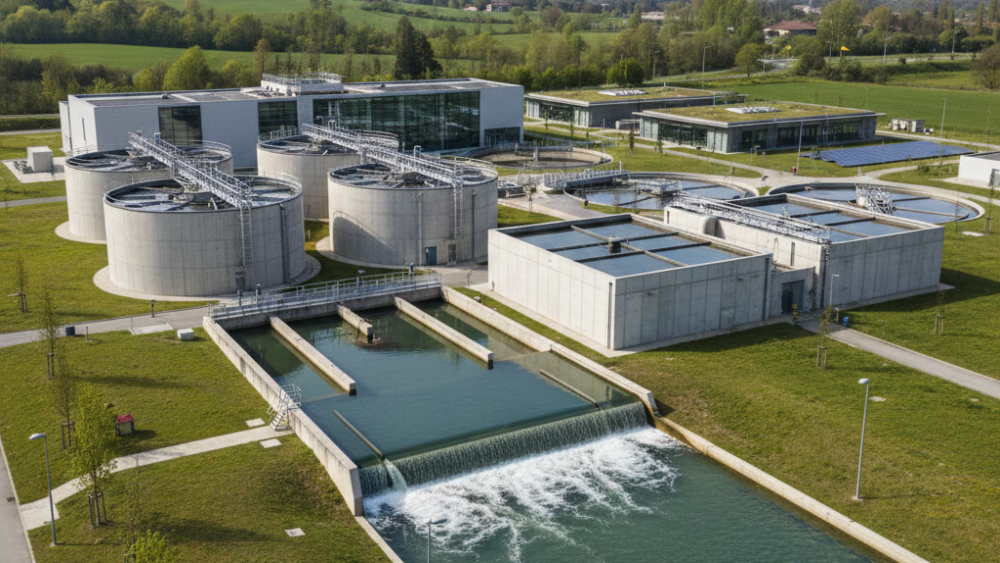
The transition from Wastewater Treatment Plant (WWTP) to Water Resource Recovery Facility (WRRF) represents one of the central challenges for the European water sector in the coming decade. In this context, the new NEOFOS project emerges—an industrial research and experimental development initiative funded by MASE (Ministry of the Environment and Energy Security) with an investment of 1.5 million euros for phosphorus recovery from wastewater.
The activities will involve four main actors:
- Gruppo CAP: project leader, responsible for overall coordination and plant-scale experimentation activities.
- MM Spa: strategic operational partner for the experimentation and modeling phases.
- Politecnico di Milano: will support modeling and optimization activities for phosphorus removal and recovery processes.
- University of Bologna: will contribute to the optimization of recovery processes from ash, as well as environmental and economic sustainability assessments.
The final objective will be to validate, on a pilot and demonstrative scale, advanced technologies for the recovery of phosphorus present in urban wastewater and sewage sludge, overcoming the limitations of traditional chemical technologies in phosphorus removal while ensuring more sustainable processes.
Phosphorus: A Critical Raw Material
Phosphorus is included in the European Union's Critical Raw Materials (CRM) list due to an extremely high supply risk. Europe depends on imports for over 90% of its phosphate rock from non-EU countries, a resource that involves two key industrial sectors:
- Agri-food Sector: Phosphorus is an essential and irreplaceable macronutrient for fertilizer production.
- Automotive and Energy Storage Sector: The growing demand for LFP (Lithium-Iron-Phosphate) batteries, preferred for cost and safety over NMC (Nickel-Manganese-Cobalt) chemistries, is creating unprecedented competition for the use of this resource.
At the same time, the Urban Wastewater Treatment Directive imposes increasingly stringent limits on nutrient discharges to combat the eutrophication of receiving water bodies. Phosphorus recovery thus becomes a dual strategy: environmental compliance and economic valorization of a waste product.
Process Innovation: From Chemical Removal to Biological Recovery
The current management standard often involves phosphorus removal through the dosing of chemical reagents (iron or aluminum salts). However, this approach is technically complex and economically burdensome.
The goal of the NEOFOS project is to successfully make the extraction cycle more sustainable: at the heart of the process will be the Bareggio treatment plant as a pilot site, managed by Gruppo CAP, and the Milano San Rocco and Nosedo plants as case studies for scale-up, provided by MM Spa.
The project's main directives will be three and synergistic:
- Optimization of the biological process: S2EBPR technology
The implementation of S2EBPR technology (Side-stream Enhanced Biological Phosphorus Removal) will allow for the capture and accumulation of phosphorus present in wastewater thanks to the action of specialized bacteria, reducing the use of chemical reagents and energy consumption.
- Valorization of sludge and ash: Struvite production
The project also envisages two recovery pathways: from sewage sludge or from mono-incineration ash. Through acid leaching and subsequent precipitation processes, it is possible to recover phosphorus in the form of struvite (Magnesium Ammonium Phosphate hexahydrate), a slow-release fertilizer, or other pure compounds usable as fertilizers or in industrial processes.
In this phase, previous experience gained by Gruppo CAP with the Sesto San Giovanni bio-platform will also be utilized, and optimization of the "struvite" pilot plant in Sesto San Giovanni is planned.
- Regulatory Framework: End of Waste
A fundamental component of the project concerns the analysis of economic sustainability and the End of Waste (EoW) certification process. The goal is to define protocols that guarantee the compliance of recovered phosphorus-based products with EU Regulations, allowing safe and traceable materials to enter the market, capable of bringing both environmental and economic benefits.
A More Sustainable Future
The NEOFOS project represents a significant case study for the application of circular economy principles to the integrated water cycle. The integration of advanced modeling, process experimentation, and market analysis aims to validate a model replicable on a national and European scale.
The integration of such technologies would not only ensure greater strategic autonomy in nutrient supply but would mark the evolution of treatment plants into facilities capable of generating value on multiple fronts (reclaimed water, energy, nutrients) while minimizing the environmental footprint.
The theme of water treatment will also be central in the next edition of Accadueo, which will be held from November 26 to 27, 2026, at the Nuova Fiera del Levante in Bari.
Stay constantly updated on all news regarding Accadueo and the civil and industrial water sector
Accadueo 2026
Following the success of the eighteenth edition in Bologna (October 7-9, 2025), Accadueo returns to Bari from November 26 to 27, 2026, confirming its position as one of the main meeting points for companies, institutions, and national and international operators.